Nandgaon Barsana ki Holi 2022

There’s Holi, and then there’s Holi in Nandgaon. If you think you’ve experienced the festival of colors, wait until you’ve been to the place where it all began — the birthplace of Lord Krishna in Uttar Pradesh, where the celebration takes on a form unlike anywhere else in the world.
The Festival of Colors
Holi falls during the Hindu month of Phalguna, typically in February or March, and marks two things: the victory of good over evil, and the arrival of spring. Across India, people take to the streets to drench each other in colored powder and water, share sweets, and celebrate the end of winter. But in the twin towns of Nandgaon and Barsana, the celebration goes deeper, drawing on centuries of mythology and tradition that are woven into the very fabric of these communities.


Lathmar Holi: When Women Take the Sticks
The signature tradition here is Lathmar Holi, and it is unlike anything you’ll see at any other Holi celebration. The legend goes that Lord Krishna once traveled from Nandgaon to Barsana to tease Radha and her friends. The women of Barsana, not ones to be mocked, chased Krishna and his friends away with sticks. That playful confrontation is reenacted every year.
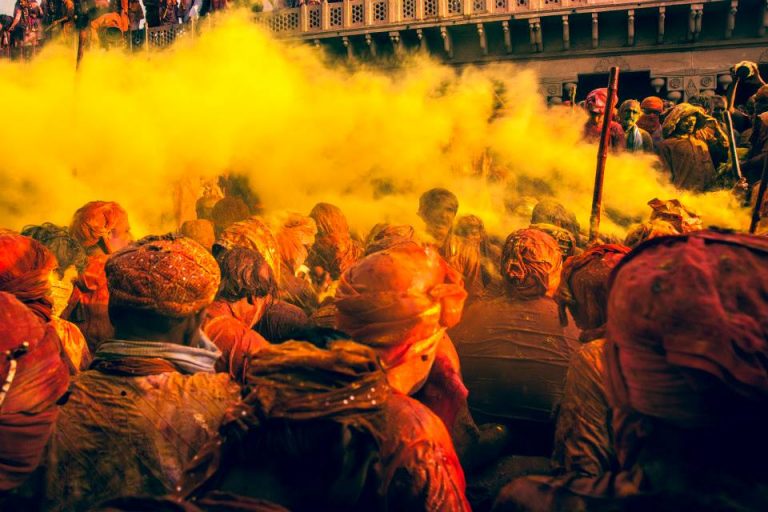
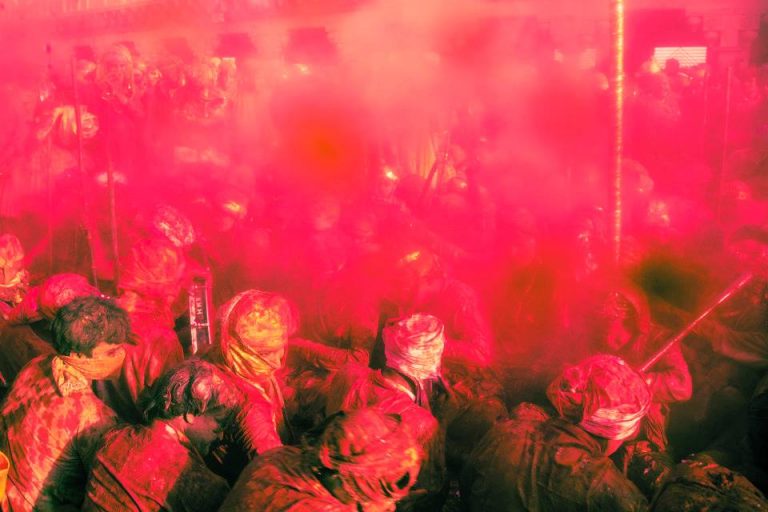
During Lathmar Holi, women from Barsana arm themselves with long wooden sticks (lathis) and playfully beat the men from Nandgaon, who try to shield themselves with padded shields. The men sing provocative songs to egg the women on, and the women respond with spirited swings. It’s theatrical, chaotic, and absolutely joyful. Everyone is laughing, everyone is drenched in color, and the energy is electric.
The Celebrations at Radha Rani Temple
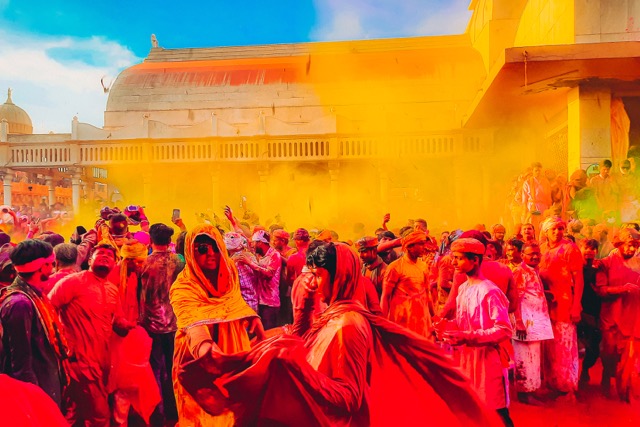
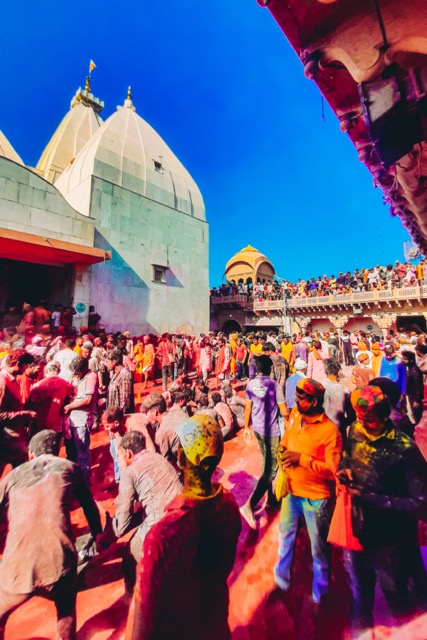
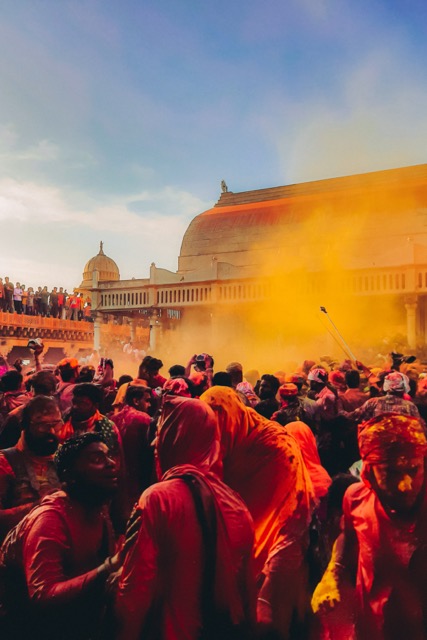
The festivities center around the Radha Rani Temple in Barsana, which sits atop a hill overlooking the town. The temple courtyard becomes the main stage for Lathmar Holi, packed with thousands of participants and spectators. Clouds of colored powder — abeer — fill the air until you can barely see the person standing next to you. Water is thrown, songs are sung, and the atmosphere is one of pure, unrestrained celebration.


Five Days of Color
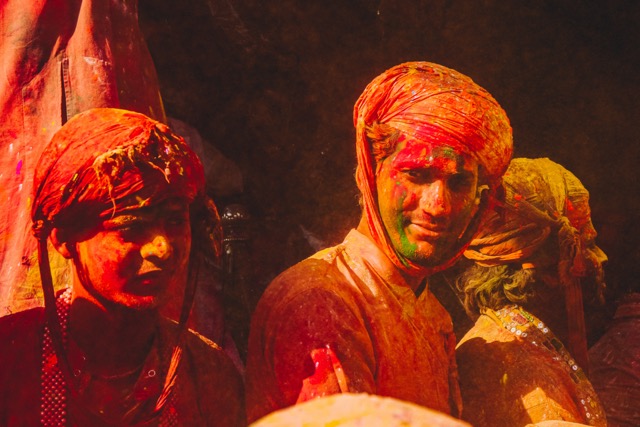
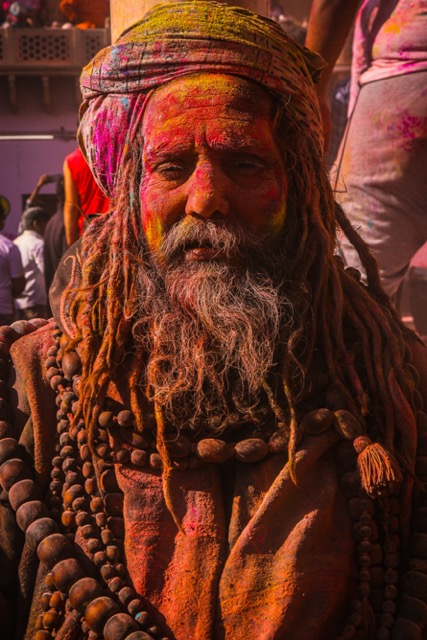
The celebration isn’t a single-day affair. It stretches across five days, building in intensity and culminating in Rang Panchami, when the women of Barsana visit Nandgaon and the roles reverse. Each day brings a different energy, a different ritual, and a different wave of color. By the end, you’re so thoroughly stained with gulal and abeer that the colors stay on your skin for days.

The Food
No Holi celebration is complete without the food, and Nandgaon delivers. Gujiya — sweet dumplings filled with dried fruits and khoya — are the quintessential Holi treat. Mathri, a flaky savory cracker, gets passed around by the handful. And dahi bhalla — lentil dumplings soaked in yogurt and topped with chutneys — provides a cooling counterpoint to the heat and chaos of the day. Families prepare these dishes for days in advance, and sharing food with strangers is as much a part of the tradition as the colors themselves.

An Experience Beyond Words
Holi in Nandgaon and Barsana isn’t just a festival — it’s a pilgrimage into the heart of Indian culture. The mythology of Krishna and Radha comes alive in a way that no book or documentary can capture. The community spirit, the generosity, the sheer uninhibited joy of it all — these are things you have to feel for yourself. If you ever have the chance to time a visit to India around Holi, make the trip to Nandgaon. You’ll come back a different shade, in more ways than one.
More photos
Comments
Loading comments…